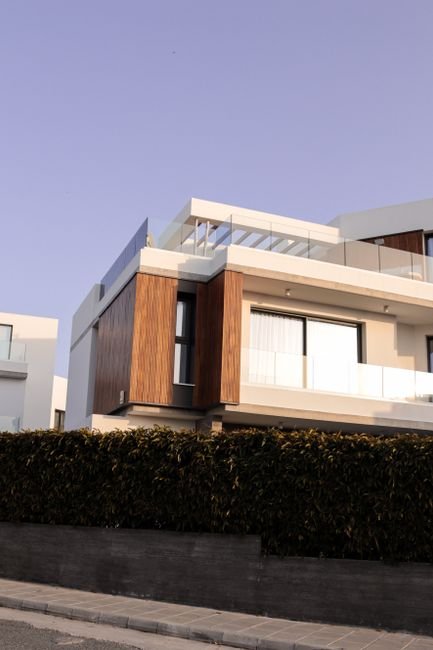
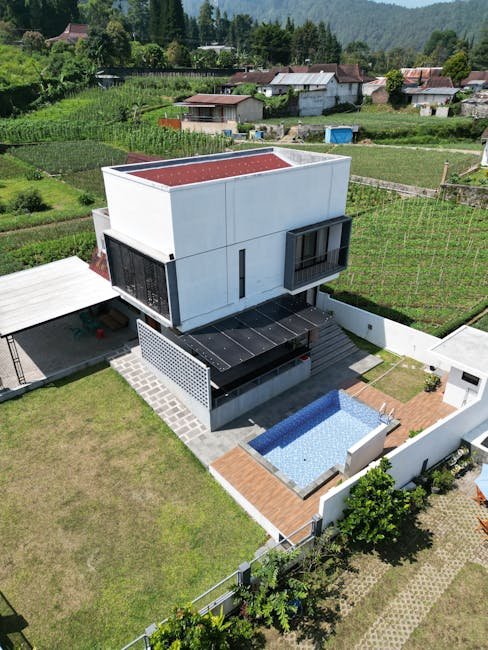
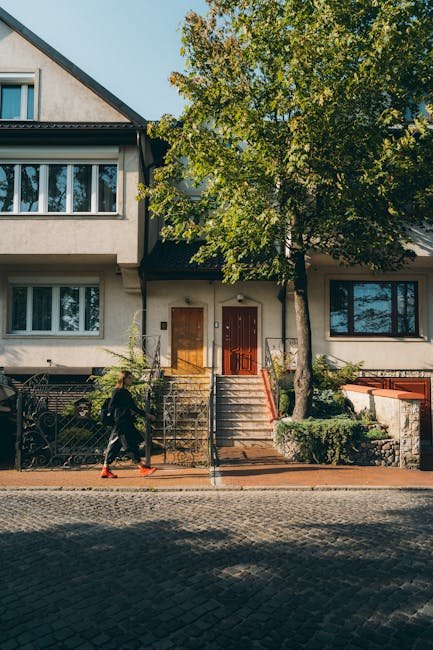
The single-family villa (独栋别墅, du dong bie shu) represents the most prestigious form of private residential architecture in contemporary China. These detached homes, typically situated in gated villa compounds on the outskirts of major cities, offer their owners the ultimate in privacy, space, and architectural expression. Unlike the dense high-rise apartments that house the majority of China's urban population, villas provide individual outdoor space, multiple floors, and the opportunity for highly customized interior and exterior design.
Historical Context and Evolution
The concept of the single-family villa is relatively new in Chinese residential history. During the imperial era, the closest equivalent was the courtyard estate of wealthy merchants and officials — a large single-story compound rather than a vertical detached house. The Western-style villa was introduced to China in the late nineteenth and early twentieth centuries through foreign concessions in Shanghai, Tianjin, and Qingdao, where expatriate communities built detached homes in European revival styles.
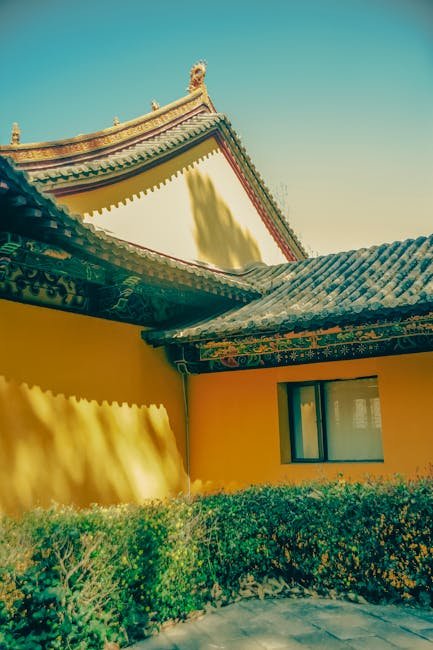
After the economic reforms of the 1980s, villa development accelerated rapidly. The first generation of Chinese villas were heavily influenced by European styles — Mediterranean, Spanish, and Neoclassical designs dominated the market. More recently, a growing appreciation for Chinese architectural heritage has led to the emergence of "new Chinese style" villas that incorporate traditional elements such as courtyard layouts, sloping roofs, and Chinese decorative motifs within modern building forms.
"The Chinese villa market has evolved dramatically over the past two decades. Buyers today are no longer satisfied with simple copies of Western styles. They want homes that express their cultural identity while providing modern comfort and luxury."
Design Characteristics
Contemporary Chinese villas typically range from 300 to 1,000 square meters of living space, situated on lots of 500 to 2,000 square meters. The architecture varies widely by region and developer, but several common characteristics can be identified. Most villas feature two to three stories above ground with a basement level that may include parking, storage, entertainment rooms, and wine cellars. The ground floor typically contains the main living areas — living room, dining room, kitchen, and sometimes a guest bedroom — arranged in an open-plan layout that differs markedly from the compartmentalized spaces of traditional Chinese homes.
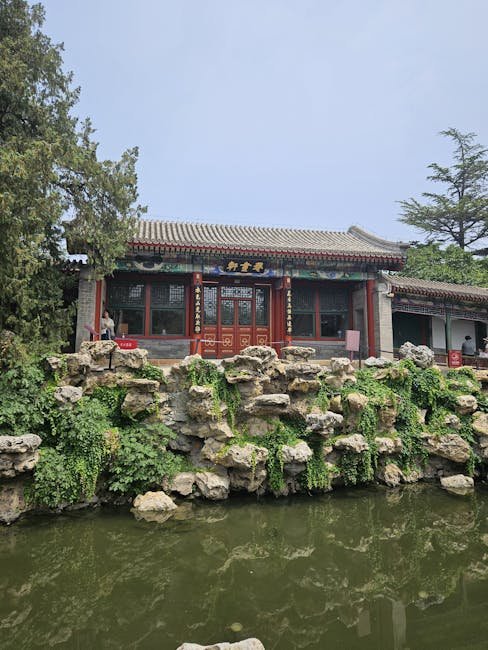
Upper floors contain the private bedrooms, with the master suite occupying the entire top floor in many luxury designs. Outdoor space is a key feature, with private gardens, terraces, balconies, and sometimes swimming pools. The garden is often designed following feng shui principles, with water features, rockeries, and carefully selected plants creating a miniature landscape that brings nature close to the house. This integration of indoor and outdoor space represents a contemporary interpretation of the traditional Chinese courtyard ideal.
Regional Variations
Villa design in China varies significantly by region, reflecting different climatic conditions, cultural preferences, and local building traditions. In northern China, villas tend to have thicker walls, smaller windows, and more compact layouts to conserve heat during cold winters. Roof forms are often more restrained, with less ornamentation than their southern counterparts. The colors are typically more subdued, with grey bricks and white or cream-colored walls predominating.
In southern China, particularly in the Yangtze River Delta region around Shanghai and Hangzhou, villa design is influenced by the Jiangnan garden tradition. These villas often feature larger windows, open verandas, and more intricate roof lines that echo the graceful curves of traditional Jiangnan architecture. Water features are common, reflecting the watery landscape of the region. In coastal areas like Hainan and Guangdong, villas may incorporate tropical architectural elements such as deep overhanging eaves, louvered windows, and open-air living spaces that blur the boundary between interior and exterior.
For those considering purchasing or designing a villa in China, understanding these regional variations is essential. The ideal villa design responds to its local climate, site conditions, and cultural context while meeting the specific needs and preferences of its occupants. Whether inspired by European classicism or Chinese tradition, the best Chinese villas create homes that are both luxurious and deeply livable.
The integration of feng shui principles into contemporary Chinese villa design represents a sophisticated synthesis of ancient cosmology and modern architecture. Site selection considers not only practical factors such as orientation, views, and access but also the "armchair" landform configuration that traditional feng shui considers ideal: protective hills at the rear, open prospect at the front, and lower flanking features on both sides. The placement of the main entrance, the location of the kitchen relative to the bedrooms, the orientation of the master bed, and even the positioning of water features and trees are all calibrated according to feng shui principles that have guided Chinese residential design for over two millennia. This is not folk superstition but an empirically developed system of environmental psychology and microclimate management that often aligns with modern principles of sustainable site planning.
The villa market in China has experienced dramatic fluctuations that reflect broader economic and policy dynamics. Following a period of speculative excess in the 2010s, during which sprawling villa suburbs were built far from urban centers with little regard for infrastructure or community planning, the market has matured toward quality over quantity. Current premium villa developments emphasize architectural distinctiveness, environmental performance, and integration with existing urban fabric rather than sheer size. The tightening of land supply policies has made new villa construction increasingly rare in China's largest cities, transforming existing villas into appreciating assets and focusing developer attention on the renovation and upgrade of older villa stock rather than greenfield construction.
The architectural language of Chinese villas has diversified considerably since the early 2000s, when European classical styles — French Provincial, Italianate, Spanish Colonial — dominated the luxury market with little adaptation to Chinese climate or culture. Contemporary villa design increasingly draws on multiple sources: the clean geometries and material honesty of Japanese modernism, the courtyard-centered spatial organization of traditional Chinese architecture, the indoor-outdoor fluidity of Southeast Asian tropical modernism, and the tectonic expressiveness of contemporary European architecture. This eclecticism is not merely stylistic but reflects a genuine search for architectural forms appropriate to contemporary Chinese life — forms that acknowledge global design culture while remaining rooted in local climatic, spatial, and cultural conditions. The most successful contemporary Chinese villas achieve a synthesis that feels neither imported nor nostalgic, creating homes that are unmistakably of their place and time.
Villa community management in China has evolved into a sophisticated professional sector that significantly influences property values and resident satisfaction. High-end villa compounds typically employ full-service property management teams responsible for security, landscaping, waste management, and community amenities. The monthly management fees for premium villa communities in Shanghai and Beijing can reach 8-15 yuan per square meter — three to five times the fees charged in luxury apartment complexes — reflecting the higher service expectations and maintenance costs associated with low-density residential environments. These management regimes include 24-hour security patrols, CCTV surveillance networks, professional landscaping teams that maintain both public gardens and private front yards, and concierge services that can arrange everything from pool maintenance to private catering. The professionalization of villa community management has been essential to the typology's viability in contemporary China, ensuring that the spatial advantages of villa living are not undermined by the practical challenges of maintaining large properties and dispersed community infrastructure.
Sustainability and Modern Villa Design
Sustainability has emerged as a defining concern in contemporary Chinese villa design, driven by both regulatory requirements and buyer expectations. Photovoltaic roof tiles that integrate seamlessly with traditional Chinese roof forms, geothermal heat pump systems that provide efficient heating and cooling, rainwater harvesting systems that irrigate gardens and supplement household water supply, and smart home energy management systems that optimize consumption patterns are becoming standard features in premium villa developments. The detached nature of villa construction makes it particularly suitable for on-site renewable energy generation and decentralized water and waste management.
Landscape architecture in Chinese villa communities has evolved from simple ornamental gardening into a sophisticated design discipline that integrates ecological function with aesthetic expression. Native plant species that require minimal irrigation, rain gardens that manage stormwater naturally, and permeable paving that reduces runoff are increasingly specified in villa landscape designs. The integration of edible landscaping — fruit trees, vegetable gardens, and herb plantings — into villa gardens reflects a growing interest in self-sufficiency and connection to food sources among affluent Chinese homeowners.
The future of Chinese villa design lies in the typology's ability to adapt to changing environmental and demographic conditions. As urban land becomes increasingly scarce and environmental regulations tighten, the villa typology must demonstrate that low-density living can be environmentally responsible. Innovations in net-zero energy design, water self-sufficiency, and sustainable materials position the villa to remain a viable and desirable housing option for those who value privacy, space, and connection to nature, while contributing positively to China's environmental goals.
The villa design market in China is increasingly distinguishing itself through architectural innovation rather than mere square footage. Leading contemporary villa architects such as Zhang Yong, Ma Yansong, and the firm Vector Architects have demonstrated that Chinese villa design can contribute meaningfully to global architectural discourse, producing works that address the fundamental questions of how to create private, luxurious, and environmentally responsible homes within the specific conditions of Chinese urbanism. The best of these projects achieve what the finest villas have always aimed for: not the display of wealth but the creation of a genuine domestic sanctuary that connects its inhabitants to the land, the seasons, and the traditions of thoughtful dwelling.
The community dimension of villa living in China is organized around the gated compound model, where clusters of villas share managed amenities and security infrastructure. These compounds range from intimate enclaves of twenty homes to large communities of several hundred villas, often incorporating clubhouses, sports facilities, and landscaped parks that serve as social hubs for residents. The management model of villa compounds has professionalized significantly, with reputable property management companies providing 24-hour security, common area maintenance, landscaping, and community event organization.
Villa Communities and Management
Chinese villa living is organized around the gated compound model, where clusters of detached homes share managed amenities and security infrastructure. These compounds range from intimate enclaves of twenty homes to large communities of several hundred villas, typically incorporating clubhouses, sports facilities, and landscaped parks. Professional property management has become essential to villa viability, with firms providing 24-hour security, common area maintenance, landscaping, and community event organization. Monthly management fees for premium compounds in Shanghai and Beijing reach 8-15 yuan per square meter, three to five times the fees in luxury apartments, reflecting the higher service expectations of villa residents.
Landscape and Garden Design
The garden is an integral component of the Chinese villa experience, serving as a private sanctuary that extends living space outdoors. Contemporary villa landscape design has evolved from simple ornamental planting into a sophisticated discipline integrating ecological function with aesthetic expression. Native plant species requiring minimal irrigation, rain gardens managing stormwater naturally, and permeable paving reducing runoff are increasingly specified. Edible landscaping incorporating fruit trees, vegetable gardens, and herbs reflects growing interest in self-sufficiency among affluent homeowners. Water features, rockeries, and miniature mountains reinterpret the traditional Chinese garden aesthetic at a domestic scale.
Market Dynamics and Investment
The Chinese villa market has experienced dramatic cycles reflecting broader economic and policy dynamics. Following speculative excess in the 2010s, the market has matured toward quality over quantity, with premium developments emphasizing architectural distinctiveness and environmental performance. Tightening land supply policies have made new villa construction increasingly rare in major cities, transforming existing villas into appreciating assets. Price premiums for well-designed villas in prime locations have proven remarkably resilient even during market downturns. The limited supply and enduring demand from China's growing wealthy class ensure that the villa segment remains the most stable sector of the luxury housing market.