The Chinese tea room (茶室, cha shi) is a specialized interior space designed for the preparation, serving, and enjoyment of tea. While the Japanese tea ceremony (茶道, cha dao) is better known internationally, the Chinese tea tradition is equally rich and has its own distinctive spatial and aesthetic traditions. A well-designed Chinese tea room creates an atmosphere of tranquility and refinement that enhances the tea experience and provides a retreat from the busyness of daily life.
The History of Chinese Tea Spaces
The tradition of dedicated tea spaces in China dates back to the Tang dynasty (618-907 CE), when Lu Yu (陆羽) wrote the "Classic of Tea" (茶经, Cha Jing), the first comprehensive treatise on tea cultivation, preparation, and consumption. During the Song dynasty (960-1279 CE), tea drinking became a refined art, with tea competitions and tasting parties held in specially designed pavilions and studios. The Ming dynasty saw the development of loose-leaf tea brewing, which replaced the earlier practice of whisking powdered tea and led to new tea wares and serving rituals.
The Chinese tea room is traditionally located in a garden pavilion or a dedicated room within the home, often with large windows or openings that frame views of nature. The relationship between the tea space and its natural setting is essential — the sight of a bamboo grove, a mossy rock, or a koi pond enhances the tea experience and connects the drinker to the rhythms of nature. This integration of interior and exterior reflects the Daoist principle of harmony between humans and the natural world.
"A tea room should be quiet, clean, and simple. The light should be soft, the air fresh, and the view peaceful. The purpose of the tea room is to create a space apart from the world, where the mind can settle and the spirit can be refreshed. The finest tea is wasted if drunk in a cluttered or noisy space."
Design Elements
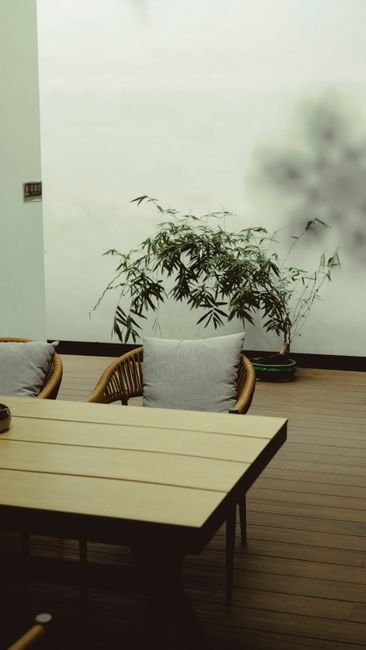
The Chinese tea room is characterized by simplicity and naturalness. The materials used — wood, bamboo, stone, clay, and linen — are chosen for their natural beauty and tactile quality. The furniture is minimal: a tea table (茶桌, cha zhuo) that serves as the focal point, a few chairs or stools, and storage for tea wares. The tea table itself is a work of art, often made from a single slab of wood with a natural edge, or from aged wood with beautiful grain.
Tea wares are displayed on shelves or in cabinets, with each piece chosen for its aesthetic quality as well as its function. Yixing clay teapots (紫砂壶, zi sha hu), handmade in Jiangsu province, are prized for their ability to absorb tea flavors over time and for their sculptural beauty. Tea cups may be of celadon, porcelain, or pottery, with each material and shape affecting the tea's flavor and the drinker's sensory experience. The water kettle, normally of iron or ceramic, sits on a dedicated heating element, its design contributing to the overall aesthetic of the space.
Creating a Tea Room at Home
A dedicated tea room can be a wonderful addition to any home, creating a space for relaxation, contemplation, and social connection. The essential requirements are a quiet location, good natural light, and a sense of separation from the rest of the home. A tea room does not need to be large — even a corner of a living room can be transformed into a tea space with the right arrangement of furniture, lighting, and decoration.
The decoration of a tea room should be restrained and meaningful. A calligraphy scroll (书法, shu fa) or a painting hanging on the wall provides a focal point for contemplation. A small bamboo plant or a vase with seasonal flowers brings nature into the space. The lighting should be warm and adjustable, allowing the atmosphere to shift from bright and lively during daytime tea sessions to intimate and calm in the evening. The overall effect should be one of tranquil simplicity — a space that invites you to sit down, breathe deeply, and enjoy a good cup of tea.
The Chinese tea room tradition differs significantly from the better-known Japanese chanoyu tea ceremony space, though they share common roots in Song dynasty tea culture. The Chinese tea room is generally less austere and less ritualized than its Japanese counterpart. Where the Japanese tea room (chashitsu) strictly controls entry through a low crawl door (nijiriguchi) that forces participants to symbolically leave social status outside, the Chinese tea room welcomes visitors through a normal-height door. The Chinese approach emphasizes the tea itself — its quality, the skill of its preparation, the beauty of the wares — over the ritual gestures that structure Japanese tea practice. This difference reflects broader cultural distinctions: Chinese culture's comfort with spontaneity and sociability versus Japanese culture's elevation of form and prescribed sequence.
Regional tea traditions across China have produced distinctive tea room aesthetics. The Gongfu tea (工夫茶) tradition of Chaozhou in Guangdong province demands a compact, intimate arrangement — a small tea tray, tiny cups no larger than a thumb, and the swift, practiced movements of the tea master brewing oolong in a palm-sized Yixing clay pot. The Sichuan tea house tradition, by contrast, produces large, lively spaces filled with bamboo chairs, the clatter of mahjong tiles, and the theatrical performance of tea pourers wielding long-spouted brass kettles. Each regional variation demonstrates how the tea room adapts to local culture, climate, and social habits, making the Chinese tea room tradition far more diverse and adaptable than its homogenized international image suggests.
The material culture of the Chinese tea room centers on the Yixing clay teapot (紫砂壶), handmade from the distinctive purple clay (zisha) found only near Yixing in Jiangsu province. The unglazed stoneware absorbs trace oils from the tea with each brewing, gradually developing a patina and depth of flavor impossible to replicate with glazed porcelain. Serious tea drinkers dedicate individual Yixing pots to specific tea varieties — one for oolong, another for pu'er, a third for green tea — allowing years of single-variety seasoning to produce pots that enhance the tea's character through accumulated memory of countless infusions. The pots themselves are sculptural artworks, with master potters signing their work and commanding prices comparable to fine paintings.
The tea room's acoustic environment is typically overlooked but essential to its character. The gentle sound of water heating in an iron kettle (the "wind in the pines" murmur prized by tea connoisseurs), the soft clink of ceramic cups, and the quiet rhythm of the tea master's movements create an aural atmosphere as carefully composed as the visual one. Some tea rooms incorporate a water feature — a small indoor fountain or a window overlooking a garden pond — whose sound masks urban noise and establishes the contemplative baseline for the tea experience. This attention to multi-sensory design — sight, sound, touch, smell, and taste all equally considered — makes the Chinese tea room one of the most holistically conceived architectural spaces in any tradition
The relationship between the Chinese tea room and the Japanese tea house (chashitsu) illuminates the divergent paths taken by a shared cultural inheritance. Both traditions emerged from the same Chinese tea culture that flourished during the Tang and Song dynasties, but they evolved in fundamentally different architectural directions. The Japanese tea house, formalized by Sen no Rikyu in the 16th century, is an independent structure of extreme simplicity — a tiny thatched hut with a low doorway requiring entrants to bow, a deliberately irregular aesthetic (wabi-sabi), and a complete rejection of ornament. The Chinese tea room, by contrast, remained embedded within the larger dwelling, part of the continuum of spaces that included the study, the garden pavilion, and the reception hall. Where the Japanese tea house sought to strip away everything non-essential to the tea ceremony itself, the Chinese tea room was designed as a setting for a wider range of cultural activities — tea drinking, certainly, but also painting, calligraphy, poetry composition, music performance, and conversation. This difference in conception provides a fascinating case study in how a shared cultural root can generate divergent architectural expressions under different social and philosophical conditions.
The global revival of interest in tea culture has generated renewed attention to the design of tea spaces in the twenty-first century. Tea rooms have become a standard feature in luxury hotels, cultural centers, and lifestyle retail spaces across China, often designed by leading architects who bring contemporary sensibilities to the traditional typology. These new tea rooms reinterpret traditional elements — the moon-viewing platform becomes a window seat with built-in tea table, the scholar's rock becomes a contemporary sculptural installation, the painted screen becomes a translucent glass partition — while maintaining the essential qualities of tranquility, intimacy, and connection to nature that define the tradition. Beyond China, tea rooms designed on Chinese principles have appeared in London, New York, and Tokyo, serving as places of cultural encounter where people from different backgrounds can experience the spatial qualities of Chinese design philosophy. This global diffusion of the Chinese tea room demonstrates that the principles underlying this ancient building type address human needs that transcend culture and remain as relevant in the age of smartphones as they were in the age of emperors.
Tea Room Materials and Finishes
Natural materials are central to Chinese tea room design. Wood, bamboo, stone, clay, and natural fibers create a tactile environment that engages the senses and promotes relaxation. The flooring is typically wooden or bamboo, providing a warm surface underfoot, while walls may be finished with natural clay plaster or left as exposed wooden panels. The choice of materials reflects the Daoist appreciation for the natural beauty of raw elements, with minimal processing that allows the inherent character of each material to shine through.
The furniture selection in a traditional tea room is deliberately minimal, with each piece chosen for its functional beauty. A hardwood tea table with visible grain patterns serves as the centerpiece, often accompanied by simple stools or low chairs that maintain an unobtrusive presence. Storage cabinets for tea wares are typically open shelves rather than closed cupboards, allowing the beauty of teapots and cups to contribute to the room's visual composition while keeping them readily accessible for use.
Lighting and Atmosphere
Lighting in a Chinese tea room is carefully calibrated to create the appropriate mood for tea drinking. Natural light is preferred, filtered through paper screens or bamboo blinds to create soft, diffused illumination. In the evening, the warm glow of lanterns or candles replaces daylight, casting gentle shadows that transform the space into an intimate sanctuary. The play of light and shadow across natural surfaces adds depth and texture to the tea room, changing throughout the day and with the seasons.
The acoustic environment is equally important to the tea room atmosphere. The gentle sound of water heating in an iron kettle, the soft clink of ceramic cups being handled, and the muted ambient sounds from the garden beyond all contribute to a layered soundscape that supports contemplative experience. Many traditional tea rooms are designed with these acoustic considerations in mind, using materials and spatial arrangements that absorb harsh noises while allowing pleasant natural sounds to filter in.
Seasonal Adaptations in Tea Spaces
Chinese tea rooms are designed to change with the seasons, reflecting the Chinese appreciation for the rhythms of nature. In summer, the tea room may be opened to breezes from a garden, with light-colored fabrics and cool ceramic wares. Winter tea sessions call for heavier fabrics, warmer lighting, and the comforting heat of an iron kettle. The tea master adjusts not only the tea varieties but also the decoration, the choice of tea wares, and even the position of furniture to harmonize with the seasonal energy.
This seasonal sensitivity extends to the choice of wall hangings and flower arrangements. A summer tea session might feature a scroll painting of lotus flowers and a simple vase with fresh greenery, while winter calls for calligraphy expressing resilience and a branch of plum blossoms. These seasonal touches keep the tea room experience fresh and connected to the natural world, ensuring that each visit offers something new while maintaining the timeless quality that defines the Chinese tea room tradition.