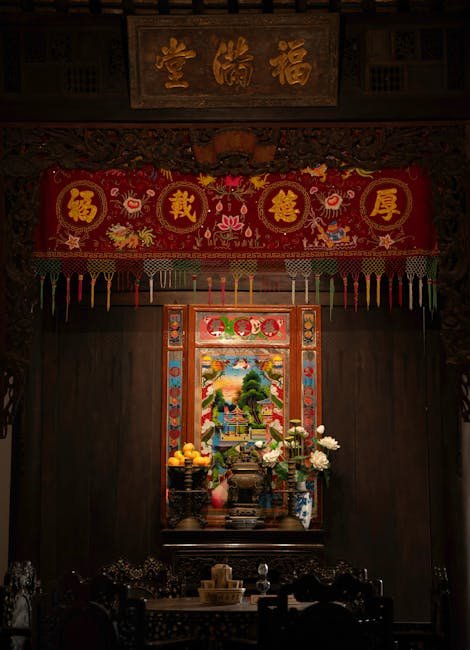
Silk (丝绸, si chou) is one of China's most celebrated cultural achievements, a textile tradition that spans over five thousand years. In Chinese interior design, silk and brocade (织锦, zhi jin) have been used for centuries as wall coverings, window treatments, upholstery, cushions, and decorative hangings, adding color, texture, and luxury to interior spaces. The use of silk in interiors was historically regulated by sumptuary laws, with certain colors and patterns reserved for the imperial family and the highest-ranking officials.
The History of Chinese Silk
According to Chinese tradition, silk cultivation (sericulture) was discovered by the Empress Leizu around 2700 BCE. For thousands of years, the technology of silk production was a closely guarded state secret, giving China a monopoly on this luxurious fabric that fueled the Silk Road trade networks connecting China with Central Asia, the Middle East, and Europe. Silk's value was such that it was used as currency and as tribute to foreign powers, and the desire for Chinese silk drove exploration and trade across Eurasia.
The interior use of silk developed alongside the textile industry itself. During the Han dynasty (206 BCE-220 CE), silk was used for wall hangings, curtains, and floor coverings in the homes of the wealthy. The Tang dynasty (618-907 CE) saw explosive growth in silk production and variety, with new weave techniques, dyes, and patterns creating an unprecedented range of fabrics. The Song dynasty (960-1279 CE) perfected the art of silk tapestry (缂丝, ke si), a technique that allowed weavers to create pictorial designs of extraordinary complexity.
Brocade (织锦, zhi jin) is a richly decorative woven fabric in which patterns are created by additional warp or weft threads that are woven into the fabric, creating a raised, textured effect. The most famous Chinese brocades are from Sichuan (蜀锦, Shu jin), Jiangsu (云锦, Yun jin), and Suzhou (宋锦, Song jin), each with its own distinctive patterns and techniques. Brocade was used for the most luxurious interior applications — throne covers, altar cloths, and the robes of emperors and high officials.
"Chinese silk is not merely a fabric — it is a painting, a poem, and a prayer woven from thread. In interior decoration, silk brings not only beauty but meaning; the patterns woven into brocade carry the same auspicious symbolism as the carvings on a beam or the paintings on a scroll. Every fold of silk tells a story."
Silk in Contemporary Interiors
In contemporary Chinese interior design, silk and brocade are used more selectively than in the past, but they remain important elements of luxury interiors. A silk cushion on a modern sofa, a brocade panel hung on a wall, or silk curtains framing a window can add warmth, texture, and a connection to tradition that elevates the entire interior. The key is to use these rich textiles thoughtfully, allowing them to stand out against simpler backgrounds rather than competing with other decorative elements.
Modern technology has made silk more accessible than ever, but the finest fabrics are still made by hand using traditional techniques. Suzhou remains the center of Chinese silk production, with workshops that continue to produce handwoven brocades using looms that have not changed in centuries. For those who appreciate quality and tradition, a piece of Suzhou silk or Sichuan brocade is not just a decorative object but a connection to one of China's greatest artistic traditions.
For homeowners interested in incorporating Chinese silk into their interiors, the most effective approach is to start with one or two key pieces. A brocade cushion on a reading chair, a silk hanging scroll in the entryway, or a set of silk curtains in the living room can transform a space without requiring a complete redesign. The natural luster of silk, combined with the rich patterns of traditional brocade, adds a depth and warmth that no synthetic fabric can match.
The production of Chinese silk brocade for architectural applications follows techniques that have remained largely unchanged for over a thousand years. The most complex form, Nanjing cloud brocade (云锦, yun jin), requires two weavers working in tandem at a drawloom over four meters tall — one operating the harness from above, the other throwing the shuttle from below — to produce just five to six centimeters of fabric per day. Each brocade incorporates silk threads wrapped in gold or silver foil, creating a luminous surface that catches and reflects light differently at every angle. The imperial workshops of Nanjing once employed over 30,000 weavers to supply the court's insatiable demand for cloud brocade, which was used for throne canopies, wall hangings, and the robes of the emperor himself. Today, fewer than fifty master weavers remain who possess the full knowledge of traditional cloud brocade techniques, making each surviving piece — and each new piece produced by these masters — an irreplaceable cultural artifact.
The symbolic language woven into Chinese silk patterns operates on multiple levels. A brocade featuring bats (蝠, fu) and peaches (桃, tao) simultaneously wishes the viewer good fortune (蝠 sounds like 福, blessing) and longevity (the peach is the fruit of immortality in Daoist mythology). A pattern of lotus flowers emerging from muddy water speaks of purity maintained amid worldly corruption. This layered symbolism — poetic, homophonic, and mythological all operating at once — means that Chinese silk decoration rewards the knowledgeable viewer with ever-deepening layers of meaning, transforming fabric into a medium of cultural expression as sophisticated as painting or poetry.
The history of Chinese silk in interior decoration is inseparable from the history of global trade. Silk wall hangings and cushions have been found in archaeological sites as far west as Palmyra in Syria and as far north as the Pazyryk burials in Siberia. The patterns woven into export silks often incorporated motifs from destination markets — Persian medallions, Central Asian animal combat scenes, European florals — while remaining identifiably Chinese in technique. This millennia-long tradition of cross-cultural design exchange makes Chinese silk one of the world's first globalized luxury commodities.
Modern conservation science has revealed the sophistication of ancient Chinese silk production. Analysis of fragments from the Mawangdui tombs (second century BCE) using scanning electron microscopy has identified thread counts and weaving densities rivaling modern industrial production. The color fastness of some excavated silks, achieved through natural mordants and dyeing techniques partially reconstructed from Han dynasty texts, exceeds that of many twentieth-century synthetic dyes. Contemporary Suzhou workshops continue to produce fabrics using looms and techniques documented in the Tiangong Kaiwu (天工开物), an illustrated encyclopedia of Chinese technology published in 1637, maintaining an unbroken chain of craft transmission spanning nearly four centuries
The regional diversity of Chinese silk and brocade traditions reflects the vast geographic and cultural range of Chinese civilization. Suzhou's Song brocade (宋锦, Song jin) reproduces the refined patterns of Song dynasty court textiles with its characteristic flat gold thread and subtle polychrome effects. Nanjing's cloud brocade (云锦, yun jin) is woven with peacock feathers twisted into the weft threads, creating an iridescent effect that shifts color as the fabric moves. Sichuan's Shu brocade (蜀锦, Shu jin) features bold geometric patterns and vibrant colors derived from the region's distinctive dye plants. Zhejiang's kesi (缂丝, cut silk) tapestry technique creates pictures woven directly into the fabric, with each color area separated by a thin slit — a technique so fine that kesi works were sometimes mistaken for paintings. Each of these regional traditions developed its own loom types, weaver training methods, and pattern repertoires, together constituting a textile heritage of extraordinary richness that has been recognized through UNESCO Intangible Cultural Heritage designations for the most endangered techniques.
The care and display of silk textiles in the Chinese interior followed conventions that maximized both preservation and aesthetic effect. Scroll-mounted calligraphy and paintings were rotated seasonally, with specific works displayed only during the season they depicted — plum blossoms in winter, lotus in summer, chrysanthemum in autumn, peony in spring. This rotation protected the delicate silk from prolonged light exposure while keeping the interior visually fresh. Textile furnishings such as cushions, bed curtains, and table coverings were used in sets that were changed according to season, with heavier brocades for winter and lighter silks for summer. The most precious textiles were stored in camphorwood chests that repelled insects while allowing air circulation, their folds interleaved with sheets of acid-free paper to prevent crease damage. This sophisticated approach to textile care and display, developed over centuries of working with materials that were at once precious artistic works and functional household objects, offers lessons for contemporary collectors and conservators that remain valid despite the availability of modern conservation technologies.
The revival of interest in traditional Chinese textiles in contemporary interior design has created new economic opportunities for weaving communities while raising questions about authenticity and adaptation. Luxury hotels and restaurants seeking to create distinctly Chinese atmospheres have become major clients for traditional brocade workshops, commissioning custom fabrics for curtains, upholstery, and wall coverings that adapt historical patterns to contemporary color preferences and fire-safety requirements. These commissions provide vital income for weavers while demanding compromises in materials and technique that some purists find troubling — the use of synthetic threads, chemical dyes, and flame-retardant treatments that would have been unknown to Ming dynasty weavers. The most successful workshops have navigated this tension by maintaining separate production lines: a museum-quality line that uses only traditional materials and techniques for conservation and heritage applications, and a contemporary line that adapts historical patterns and techniques to modern performance standards. This dual approach, while commercially pragmatic, also serves an important cultural function by keeping traditional knowledge alive across a broader range of applications than conservation alone could support.
Types of Chinese Silk Fabric
Chinese silk encompasses a remarkable variety of fabric types, each suited to different interior applications. Silk gauze (罗, luo) is lightweight and breathable, ideal for summer curtains and sheer overlays. Satin (缎, duan) has a lustrous surface created by floating warp threads, making it the preferred fabric for formal upholstery and decorative cushions. Brocade (织锦, zhi jin) features raised patterns woven with supplementary threads, often incorporating gold or silver filaments for a luxurious effect that catches the light.
Kesi (缂丝), or cut-silk tapestry, occupies a special position as both textile and art form. Unlike other silk weaves where the pattern is applied through dyeing or embroidery, kesi creates the image directly during weaving, with each color area woven separately and joined by small slits. This painstaking technique allows the production of pictorial works of extraordinary detail, with kesi wall hangings ranking among the most prized possessions of Chinese collectors for centuries.
Symbolism in Silk Patterns
The patterns woven into Chinese silk and brocade carry layers of symbolic meaning that connect interior decoration to broader cultural values. The dragon (龙, long) represents imperial authority and masculine power, while the phoenix (凤, feng) symbolizes feminine grace and beauty. When depicted together, dragon and phoenix represent marital harmony. Peonies, the king of flowers, signify wealth and honor, while plum blossoms represent resilience and hope as the first flower to bloom in spring.
Auspicious symbols are frequently combined to create layered blessings. Bats, whose name (福, fu) sounds like the word for good fortune, are often shown with peaches representing longevity or coins representing wealth. The eight Buddhist treasures, the eight Daoist emblems, and the four scholarly pursuits (music, chess, calligraphy, painting) all appear in silk patterns, allowing the homeowner to display their cultural knowledge and aspirations through the fabric of their interior.
Caring for Silk in the Home
Silk requires careful maintenance to preserve its beauty and longevity in interior settings. Direct sunlight is the primary enemy of silk, causing fading and embrittlement over time. Silk curtains and upholstery should be lined with protective fabric and positioned away from south-facing windows where possible. Professional dry cleaning is recommended for most silk interior fabrics, though some brocades with metallic threads require specialized conservation cleaning to prevent tarnishing of the gold or silver filaments.
Traditional Chinese methods of silk care offer time-tested approaches to preservation. Silk wall hangings and scrolls were traditionally rotated seasonally, displayed only for limited periods before being carefully stored in camphorwood chests. This rotation not only protected the silk from prolonged light exposure but also kept the interior visually fresh as different pieces were brought out according to the season. Modern collectors can adopt this practice, enjoying their silk treasures in controlled rotations that extend their lifespan indefinitely.
Regional Brocade Traditions
China's three great brocade traditions each bring distinctive qualities to interior decoration. Shu brocade (蜀锦) from Sichuan, the oldest tradition dating back to the Han dynasty, is known for its bold geometric patterns and vibrant colors derived from regional dye plants. Yun brocade (云锦) from Nanjing, the most luxurious, incorporates threads wrapped in gold foil and was historically reserved for imperial use. Song brocade (宋锦) from Suzhou reproduces the refined patterns of Song dynasty court textiles with subtle polychrome effects.
Each tradition developed its own characteristic patterns and color preferences. Shu brocade favors large-scale pattern repeats with strong contrast, making it effective as a statement wall hanging or a dramatic curtain fabric. Yun brocade's subtle shimmer and refined patterns suit formal reception rooms and master bedrooms where luxury is appropriate. Song brocade's delicate patterning works well in smaller applications such as cushion covers or table runners, where its intricate details can be appreciated at close range.