New Chinese Style (新中式, xin zhong shi) is a contemporary design movement that reinterprets traditional Chinese aesthetic principles and elements for modern living. Emerging in the early 2000s as Chinese designers and homeowners sought alternatives to both Western-style interiors and historical pastiche, New Chinese Style represents a thoughtful synthesis of tradition and modernity. It is not about copying historical forms but about capturing the spirit of Chinese design — its spatial sensibility, its material quality, and its philosophical depth — in a contemporary idiom.
Design Principles
New Chinese Style is characterized by several key principles. Simplicity and restraint are valued over ornamental excess — the goal is to create calm, serene interiors that feel spacious and uncluttered. This represents a departure from the heavily ornamented classical Chinese interior, drawing instead on the spare elegance of Ming dynasty furniture and the minimalist aesthetic of traditional Chinese ink painting. Every object in a New Chinese Style interior is carefully chosen and intentionally placed; there is no room for the merely decorative.
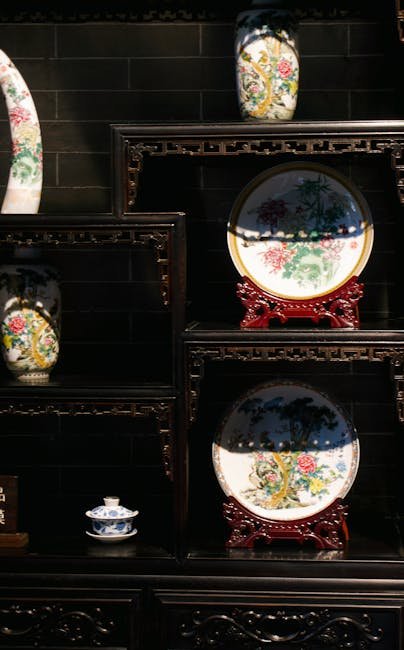
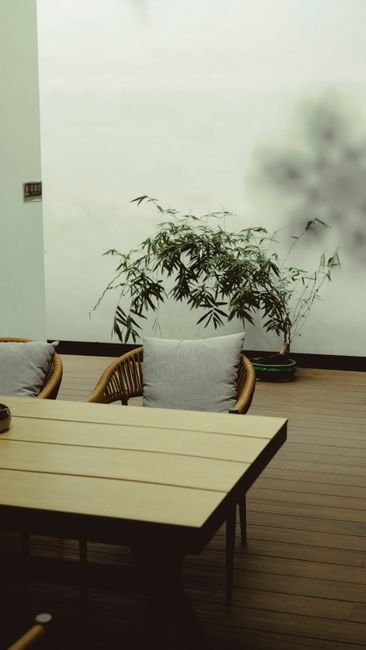
Natural materials are central to the New Chinese Style aesthetic. Wood, stone, bamboo, rattan, linen, and clay are used in their natural finishes as much as possible, creating interiors that feel grounded and warm. The color palette is typically restrained — neutral tones of white, beige, gray, and brown are punctuated by accent colors drawn from the traditional Chinese palette: celadon green, cobalt blue, cinnabar red, and ochre yellow. This restrained use of color creates interiors that are sophisticated and timeless rather than thematically Chinese.
"New Chinese Style is not about applying Chinese motifs to Western interiors. It is about understanding the fundamental principles of Chinese spatial design — the relationship between solid and void, the play of light and shadow, the integration of indoor and outdoor — and expressing them through contemporary forms and materials."
Key Elements
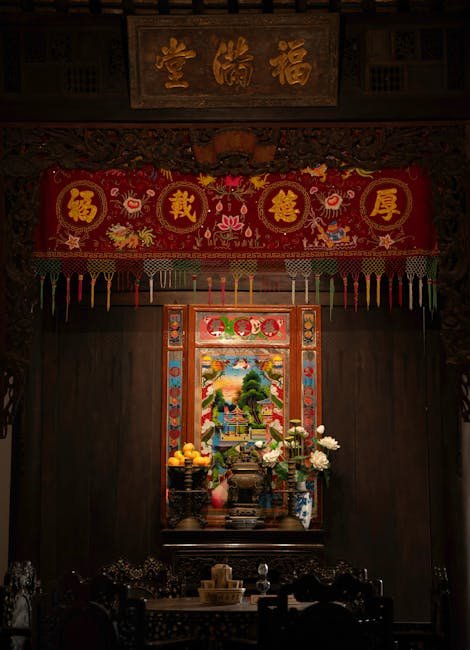
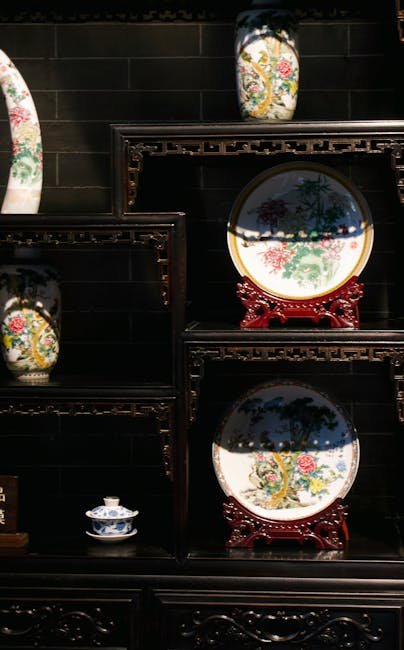
Certain elements recur in New Chinese Style interiors, serving as visual anchors that connect the contemporary space to tradition. The folding screen (屏风, ping feng) is used as a spatial divider, creating zones within an open-plan space while providing a surface for artistic expression. The wooden lattice partition (花格, hua ge) evokes traditional window lattices while serving as a room divider. The low Ming-style table provides a focal point for seating arrangements, often accompanied by floor cushions rather than Western-style sofas.
Contemporary art and calligraphy are displayed on walls with generous white space, echoing the compositional principles of Chinese scroll painting. Lighting is carefully controlled, with a preference for warm, ambient light sources that create pockets of illumination rather than flooding the room with uniform brightness. Traditional materials such as bamboo flooring, handmade clay tiles, and linen wall coverings add texture and depth to the interior. The overall effect is one of calm, clarity, and cultural confidence — a space that feels Chinese without being costumed.
Global Influence
New Chinese Style has gained international recognition, influencing design beyond China's borders. International hotel chains, luxury brands, and residential designers have incorporated elements of the style into their projects, attracted by its sophisticated minimalism and cultural authenticity. The style resonates with a global audience that values craftsmanship, sustainability, and cultural depth — qualities that New Chinese Style embodies naturally.
For homeowners seeking to incorporate Chinese elements into their interiors, New Chinese Style offers a flexible and sophisticated approach. Rather than filling a room with Chinese antiques and decorative objects, the New Chinese approach selects a few meaningful pieces — a Ming-inspired table, a contemporary calligraphy scroll, a celadon vase — and allows them space to breathe. The result is an interior that feels curated rather than decorated, personal rather than themed, and connected to tradition without being constrained by it.
The philosophical foundation of New Chinese Style draws deeply from the Song dynasty aesthetic tradition, which valued subtlety over spectacle and suggestion over statement. Song dynasty scholars and artists developed an aesthetic vocabulary centered on understated elegance — the beauty of a single plum blossom branch in an otherwise empty vase, the satisfaction of celadon glaze that resembles the color of rain-washed sky, the disciplined economy of a poem that says everything by saying very little. New Chinese Style translates this Song sensibility into contemporary spatial terms: the unadorned wall that carries as much meaning as a decorated one, the empty corner that provides visual rest, the single object chosen with such care that it needs no companions.
The international reception of New Chinese Style reflects a broader shift in global design culture toward authenticity, craftsmanship, and cultural specificity. After decades in which international modernism imposed a universal aesthetic indifferent to local traditions, designers and consumers increasingly seek interiors that express cultural identity through contemporary means. New Chinese Style leads this movement in the Chinese context, demonstrating that tradition need not be preserved in amber or reduced to surface decoration — it can be a living source of spatial ideas that speak to contemporary needs while remaining rooted in centuries of design thinking.
The commercial embrace of New Chinese Style has produced celebrated hospitality interiors worldwide. The Amanfayun resort near Hangzhou transformed a historic tea-plantation village into a luxury hotel where ancient stone pathways, preserved mud-brick walls, and traditional timber structures coexist with minimalist contemporary furnishings. The PuLi Hotel in Shanghai adapts the proportions and material palette of a classical Chinese courtyard house into a sleek urban tower, with screens of dark wood, woven silk panels, and still-water pools creating contemplative calm within the city's most dynamic commercial district. These projects demonstrate that New Chinese Style represents a comprehensive design language applicable to any building type, not merely residential interiors.
Critical voices within Chinese architecture have raised concerns about superficial applications of the style. When reduced to token objects — a calligraphy scroll on a generic wall, a Ming-style chair in a standard developer apartment — New Chinese Style becomes cultural decoration rather than spatial thinking. The most thoughtful practitioners insist on engaging with fundamental spatial principles: the relationship between solid and void, the choreographed sequence of spaces, the integration of interior and exterior. This productive tension between depth and decoration ensures the style's continued vitality as more than a passing fashion
The material palette of New Chinese Style deserves particular attention for its role in defining the style's identity. Beyond the obvious choices of wood and stone, contemporary practitioners have expanded the material vocabulary to include materials that reference tradition through association rather than imitation. Bamboo flooring and wall cladding bring the warmth of this quintessentially Chinese material into modern interiors without relying on stereotypical bamboo motifs. Handmade clay tiles, traditionally used on roofs, are repurposed as accent walls or fireplace surrounds, their irregular surfaces adding texture and depth. Paper — the translucent mulberry paper (xuan paper) traditionally used for calligraphy and painting — appears in contemporary forms as lampshades, room dividers, and window treatments, filtering light with the soft diffusion that traditional Chinese interiors achieved through paper-covered lattice windows. These material choices demonstrate the New Chinese Style strategy of extracting the sensory essence of traditional materials — their texture, light-transmission properties, and tactile qualities — and applying them in contemporary contexts, achieving cultural continuity without pastiche.
The relationship between New Chinese Style and sustainability is a growing area of interest, as the movement's emphasis on craftsmanship, natural materials, and durable design aligns naturally with contemporary environmental values. The New Chinese preference for high-quality, handmade pieces that last for generations rather than disposable mass-produced furniture reflects a pre-industrial approach to consumption that resonates with today's sustainability concerns. The use of local materials — bamboo from Anji, stone from Yunnan, clay from Jiangsu — reduces transportation emissions while supporting regional craft economies. Several leading New Chinese Style designers have explicitly connected their work to sustainability, arguing that the movement's rejection of fast furniture and themed decor in favor of thoughtful, durable, and repairable design offers a model for an industry seeking to reduce its environmental footprint. This alignment between traditional Chinese values of material respect and durability and contemporary sustainability goals represents one of the most promising directions for the future evolution of New Chinese Style, as it demonstrates that the tradition is not merely an aesthetic option but a coherent design philosophy with relevance to the most pressing challenges facing the design world today.
New Chinese Style has also found expression in product design, graphic design, and even digital interfaces, extending its influence beyond architecture and interiors. Product designers have created furniture, lighting, tableware, and textiles that reinterpret traditional Chinese forms through contemporary manufacturing methods — a Ming-style porcelain cup produced by slip-casting, a lattice-inspired room divider fabricated from laser-cut plywood, a calligraphy-motif textile produced by digital printing. These product designs make New Chinese Style accessible at multiple price points, from mass-produced items available at mainstream retailers to limited-edition pieces from independent studios. Proponents argue that this democratization of the style through accessible products is essential to its long-term vitality, preventing it from becoming a luxury niche reserved for the wealthy. Critics counter that the proliferation of superficial Chinese motifs in mass-market products dilutes the spatial intelligence that makes the style genuinely distinctive. The tension between accessibility and integrity, between democratization and dilution, will likely define the next phase of New Chinese Style as it moves from a movement led by architects and interior designers to a broader cultural phenomenon with implications for how Chinese design identity is expressed across all scales of material culture.
Material Palette and Craftsmanship
The material palette of New Chinese Style extends beyond traditional choices to include innovative contemporary materials that complement classic elements. Bamboo, stone, wood, and natural fibers remain foundational, but they are now joined by materials such as exposed concrete, steel, glass, and engineered composites that bring a modern edge to the traditional sensibility. The key is not the material itself but how it is used — with respect for its natural qualities and an understanding of its role in the overall composition.
Craftsmanship is central to New Chinese Style, with an emphasis on quality over quantity. Furniture pieces are often handmade or produced by small workshops that preserve traditional joinery techniques without slavishly copying historical forms. The visible grain of a hardwood tabletop, the precise alignment of a mortise-and-tenon joint, the even glaze of a celadon vase — these details reward close attention and create a sense of permanence and authenticity that mass-produced furniture cannot match.
Color and Light in New Chinese Style
Color in New Chinese Style is used with restraint and intention. The base palette consists of warm neutrals — cream, beige, warm gray, and soft brown — that create a calm backdrop for carefully chosen accent colors. Traditional Chinese pigments appear as deliberate highlights: celadon green on ceramic pieces, cinnabar red on a lacquered box, cobalt blue in textile patterns. These accents carry cultural resonance without overwhelming the space, serving as visual punctuation rather than decoration.
Lighting design follows the same principle of considered restraint. Ambient light is diffused through paper shades or linen screens, creating the soft, even illumination associated with traditional Chinese interiors. Task lighting is directed and purposeful, highlighting specific areas for reading, tea preparation, or display. The interplay of light and shadow — a lantern casting patterns on a white wall, sunlight filtering through bamboo blinds — becomes part of the decorative scheme, adding layers of visual interest that change throughout the day.
Bringing New Chinese Style Home
Adopting New Chinese Style in a home does not require a complete redesign. The approach can be gradual and selective, starting with a few key pieces that capture the spirit of the style. A Ming-inspired dining table, a set of celadon dinnerware, a calligraphy scroll displayed with generous white space — these individual elements can transform a conventional room into one that reflects Chinese aesthetic values. The essential principle is curation: each piece should earn its place through quality and meaning.
The spatial arrangement is equally important. New Chinese Style values breathing room — generous white space on walls, open floor areas that allow movement and flow, and a deliberate avoidance of clutter. Furniture is arranged to facilitate conversation and contemplation rather than to fill the room. Windows are treated simply to maximize natural light, and views are framed as living pictures. The result is an interior that feels spacious, serene, and deeply considered, whether it occupies a city apartment or a suburban house.