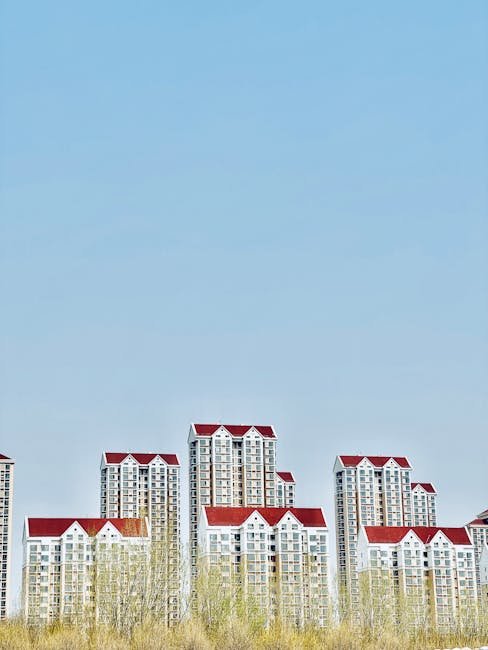
A balanced approach to urban housing, offering the benefits of apartment living at a more human scale.
Mid-rise apartments (多层住宅, duo ceng zhu zhai) — typically defined as buildings of four to eight stories without elevators — occupy a special place in China's residential landscape. While high-rise towers dominate the skylines of major cities, mid-rise buildings form the fabric of countless neighborhoods in smaller cities, older urban districts, and suburban communities. This housing type offers a distinctive set of spatial and social qualities that many residents find preferable to either high-rise towers or low-density sprawl.
Historical Context
Mid-rise apartments were the dominant form of urban housing in China from the 1950s through the 1980s. During the socialist era, state-owned enterprises and government institutions built apartment buildings for their workers, typically in the four-to-six-story range. These buildings were constructed using standardized designs and prefabricated concrete panels, creating the uniform residential blocks that still characterize many Chinese urban neighborhoods. The walk-up apartment building became the quintessential housing type of China's socialist urbanism.
After the economic reforms, mid-rise construction continued but was gradually supplanted by high-rise towers as land values increased and construction technology advanced. However, mid-rise apartments remain a significant portion of China's housing stock, and in many older urban neighborhoods, they continue to house millions of families. In recent years, there has been a renewed interest in mid-rise design among architects and urban planners who recognize the human-scale qualities that this housing type can provide.
"The mid-rise apartment building, when well-designed, achieves a rare balance between density and livability. It is tall enough to use land efficiently but low enough to maintain a human connection to the street. The walk-up access, often criticized as inconvenient, actually creates incidental social encounters that build community in ways that elevator buildings cannot."
Design and Living Experience
Chinese mid-rise apartments typically range from 50 to 150 square meters, with layouts that have evolved significantly over the decades. Older buildings from the socialist era typically have smaller rooms, lower ceilings, and simpler finishes, reflecting the standards of their time. Newer mid-rise buildings offer larger apartments with more contemporary layouts, better insulation, and higher-quality materials. The walk-up access means that upper-floor apartments are less accessible but often offer better light and views, and in some markets, they command lower prices than ground-floor units.
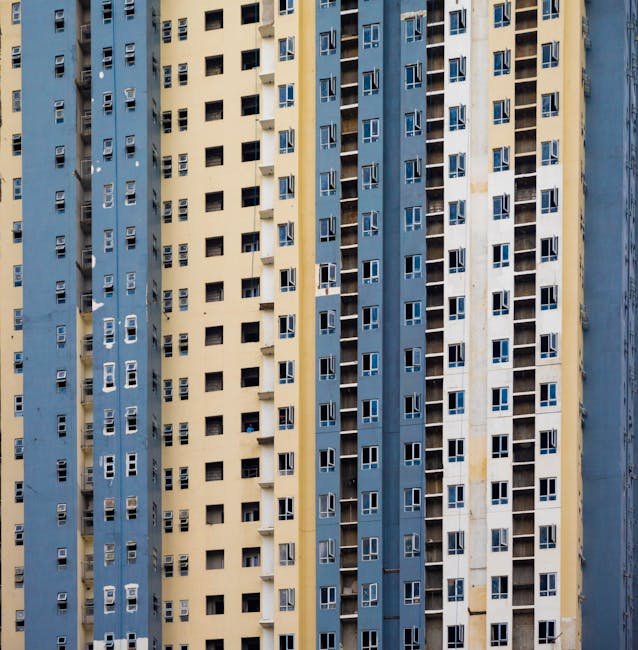
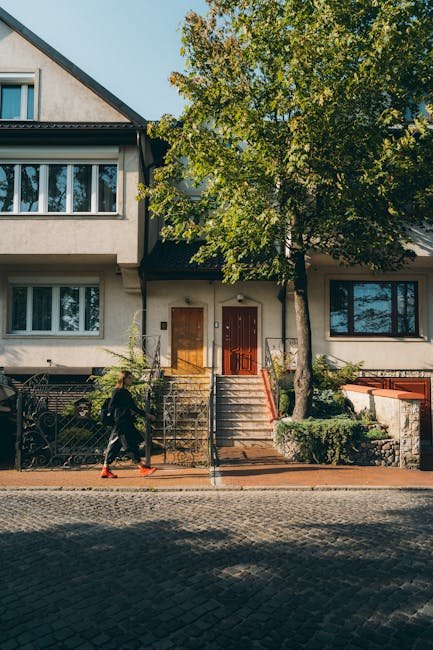
The spatial qualities of mid-rise living differ notably from high-rise apartments. The lower building height means that residents maintain a visual connection to the street and neighborhood, rather than being isolated in the sky. The walk-up access creates incidental encounters with neighbors on stair landings and at building entrances, fostering a sense of community that is often lacking in high-rise elevator buildings. The lower density also means less competition for shared resources such as parking, green space, and community facilities.
Challenges and Renovation
Many of China's existing mid-rise apartments are aging and in need of renovation. The prefabricated concrete buildings of the 1950s-1980s face challenges with insulation, plumbing, electrical systems, and seismic safety. In response, the Chinese government has launched ambitious programs to retrofit and upgrade existing mid-rise housing stock, adding insulation, replacing windows, upgrading utilities, and in some cases, adding elevators to walk-up buildings to improve accessibility for elderly residents.
The retrofit of mid-rise apartments with elevators is a particularly significant trend in Chinese cities. As China's population ages, the walk-up building becomes increasingly problematic for elderly residents who cannot easily climb stairs. Government programs now subsidize elevator installation in existing mid-rise buildings, transforming them into de facto high-rises with improved accessibility. This pragmatic adaptation extends the useful life of China's mid-rise housing stock while improving quality of life for millions of residents.
For homebuyers and renters in Chinese cities, mid-rise apartments offer a compelling combination of affordability, community character, and urban location. While they may lack the prestige amenities of luxury high-rise developments, they provide a quality of urban living that is increasingly valued by those who seek authentic neighborhood experiences and human-scale environments. As Chinese cities evolve, the mid-rise apartment building is likely to be rediscovered as a valuable housing type that contributes to urban diversity and livability.