The majestic architecture of the Tibetan plateau, shaped by Buddhism, harsh climate, and mountainous terrain.
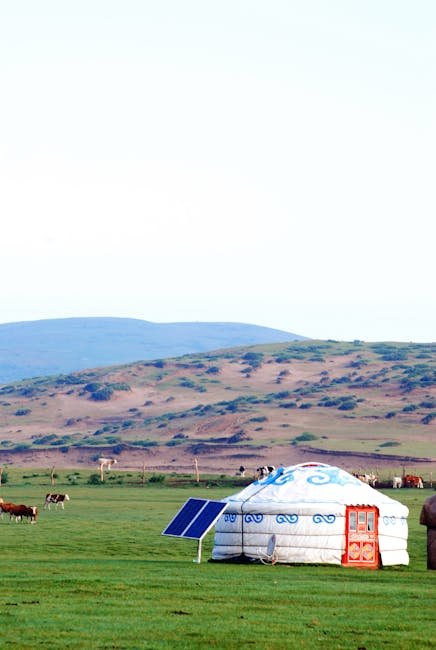
Tibetan architecture (藏式建筑, Zangshi jianzhu) is one of the most distinctive and visually powerful regional building traditions in China. Developed over centuries on the high Tibetan plateau, where the average elevation exceeds 4,000 meters, this architectural tradition is characterized by massive stone walls, flat roofs, inward-sloping facades, and vivid colors that stand in dramatic contrast to the stark mountain landscape. Tibetan architecture encompasses three main building types: monasteries (gompa), fortresses (dzong), and vernacular village houses.
Historical and Cultural Context
Tibetan architecture has been profoundly shaped by Tibetan Buddhism, which was introduced to the region in the seventh century CE and became the dominant cultural force. Monasteries are the most significant building type in Tibetan architecture — they are not merely religious centers but also educational institutions, economic hubs, and repositories of art, literature, and culture. The largest Tibetan monasteries, such as Drepung, Sera, and Ganden near Lhasa, were essentially walled towns housing thousands of monks, with assembly halls, temples, colleges, and residential quarters arranged on a monumental scale.
The harsh environmental conditions of the Tibetan plateau also deeply influenced architectural forms. The cold, dry climate and intense solar radiation demanded buildings with thick, well-insulated walls and small windows. The scarcity of timber on the treeless plateau meant that stone and rammed earth became the primary building materials. The flat roofs serve practical purposes — they provide outdoor living space in a land where level ground is scarce, and they allow the quick shedding of snow and rain.
"Tibetan architecture is a dialogue between the human and the divine, played out on the roof of the world. The monasteries rise from the mountainsides like man-made mountains themselves, their white walls and golden roofs visible for miles. In this landscape, architecture is not merely shelter but a statement of faith, power, and cultural identity."
Architectural Features
The most visible feature of Tibetan architecture is the inward-sloping exterior wall (收分墙, shou fen qiang), a design derived from the traditional rammed-earth construction technique in which the wall tapers slightly as it rises. This slope gives Tibetan buildings their characteristic solid, grounded appearance, as if they grew naturally from the earth. The walls are typically whitewashed, but the top section of the wall is often painted with a broad band of dark red or ocher, made from crushed and dyed tamarisk branches (边玛草, bian ma cao) that are bundled and inserted into the wall as a decorative and insulating frieze.
Colors carry deep symbolic meaning in Tibetan architecture. White represents purity and peace and is used for the majority of wall surfaces. Red symbolizes power and protection and is used for important buildings such as temples and the palaces of senior lamas. Gold leaf is used on monastery roofs and temple ornaments, symbolizing enlightenment and the Buddha's teachings. The black frames around windows represent the protective deity Mahakala, and the multicolored prayer flags that flutter from roofs and ridges carry blessings to the four directions.
The Potala Palace
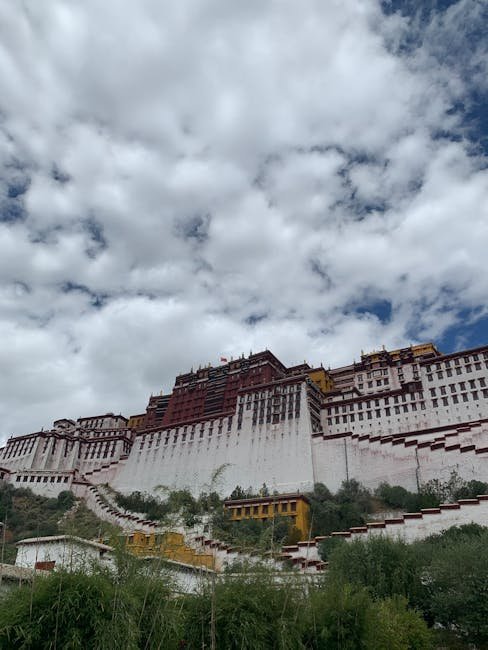
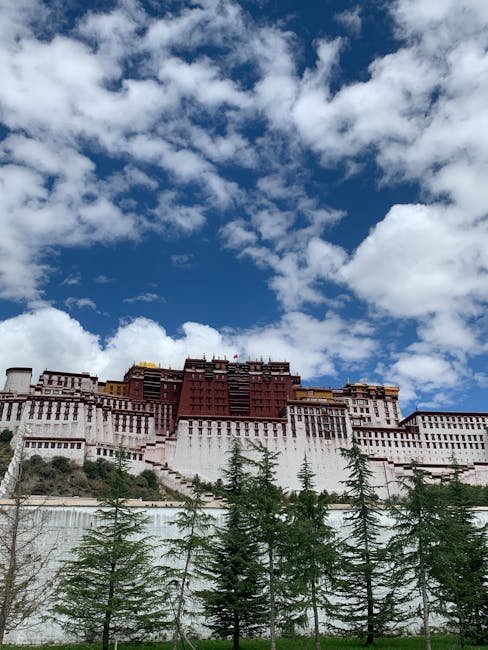
The Potala Palace in Lhasa is the most celebrated example of Tibetan architecture and one of the most iconic buildings in China. Perched on Red Mountain at an elevation of 3,700 meters, the Potala is a massive thirteen-story palace complex covering 130,000 square meters. Construction began in the seventh century under King Songtsen Gampo and was expanded to its present form in the seventeenth century by the Fifth Dalai Lama. The palace contains over 1,000 rooms, including temples, chapels, living quarters, administrative offices, and burial stupas for eight Dalai Lamas.
The Potala's design embodies the principles of Tibetan architecture at the highest level. The white palace (白宫) houses the administrative and residential functions, while the red palace (红宫) contains the sacred temples and stupa chapels. The facade slopes inward, the windows are framed in black, and the roofline is crowned with golden stupas and prayer flags. The Potala is not merely a building but a sacred mountain made architectural — a fitting symbol of the intersection of heaven and earth that Tibetan architecture seeks to express.