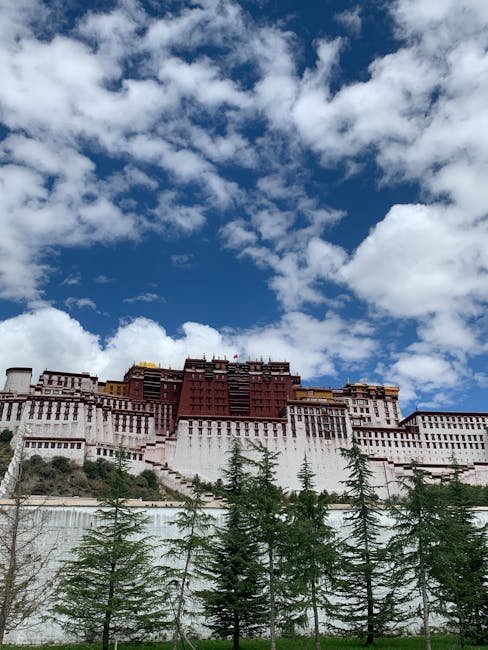
The remarkable earthen fortresses of the Hakka people, where entire clans lived within massive circular walls.
The Fujian Tulou (福建土楼) are among the most extraordinary vernacular buildings in the world — massive, multi-story earthen fortresses that housed entire Hakka clans in the mountainous border region between Fujian, Jiangxi, and Guangdong provinces. These remarkable structures, built primarily between the 15th and 20th centuries, combine defensive fortification with communal living in a building type that has no parallel in world architecture. In 2008, forty-six Fujian tulou were inscribed as UNESCO World Heritage sites.
The Hakka People and Their Architecture
The Hakka (客家, ke jia), meaning "guest families," are a Han Chinese ethnic group whose ancestors migrated from northern China to the south over many centuries, beginning as early as the Jin dynasty (265-420 CE). As newcomers in the south, the Hakka often settled in marginal, hilly areas and faced periodic conflict with local populations. This history of migration and conflict shaped the distinctive architecture of the tulou — massive, fortified structures that provided security for the community while expressing the Hakka's strong clan-based social organization.
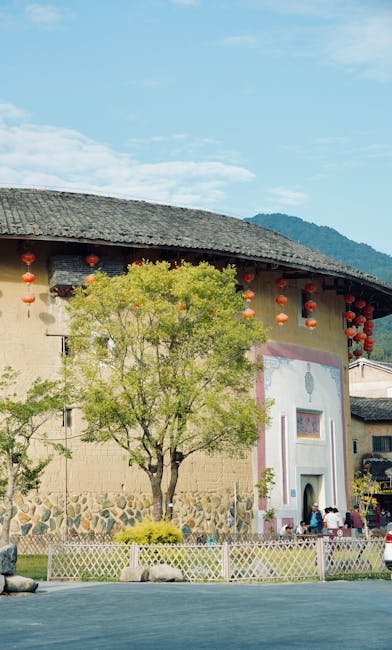
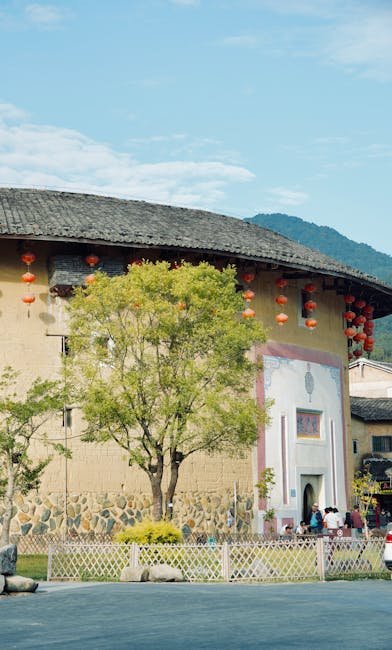
The tulou served as complete communities, housing up to 800 people in a single structure. The typical tulou is a large, enclosed compound, circular or rectangular in plan, with exterior walls of rammed earth up to two meters thick at the base. The exterior walls are windowless on the lower floors, with narrow embrasures on the upper floors for defense. A single large gate, sheathed in iron and reinforced with heavy timbers, provides the only entrance, creating a fortress-like appearance that belies the vibrant community life within.
"The Fujian tulou are among the most remarkable architectural creations in the world — a perfect synthesis of form, function, and social organization. These buildings are not merely dwellings but complete social worlds, where the architecture itself embodies the values of clan solidarity, mutual defense, and communal harmony that defined Hakka culture."
Design and Construction
The most famous tulou are circular in plan, a form that offers several advantages: it minimizes the exterior wall surface for a given interior volume, reducing construction materials and heat loss; it allows for even distribution of structural loads; and it creates a strong sense of community with all units facing the central courtyard. The largest circular tulou, Chengqi Lou (承启楼) in Yongding County, has a diameter of 73 meters and contains 370 rooms on four floors, divided into four concentric rings.
The construction of a tulou was a monumental communal effort. The walls are built of rammed earth (夯土, hang tu) — a mixture of clay, sand, lime, and stone, compacted layer by layer between wooden formwork. The resulting wall is extraordinarily durable, resistant to both weather and earthquake, and capable of lasting for centuries with minimal maintenance. The interior structure is timber-framed, with wooden floors, stairs, and balconies arranged around the central courtyard. The ground floor typically contains kitchens and dining areas, the second floor grain storage, and the upper floors living and sleeping quarters.
Living Heritage
Many tulou continue to be inhabited today, though the younger generation has increasingly moved to cities, leaving the elder generation to maintain traditional ways of life. The tulou have become major tourist attractions, bringing economic benefits to local communities while also raising challenges of preservation and cultural continuity. The UNESCO designation has helped secure international attention and funding for conservation efforts, and many tulou have been carefully restored.
For visitors to Fujian, the tulou offer an unforgettable experience. Walking through the massive gate of a circular tulou, entering the central courtyard with its wells, ancestral hall, and communal spaces, and climbing the wooden stairs to the upper floors provides a glimpse into a way of life that has sustained Hakka communities for centuries. The tulou are not just architectural monuments but living communities, where the traditions of Hakka culture — including their distinctive dialect, cuisine, and customs — continue to thrive within the ancient earthen walls.