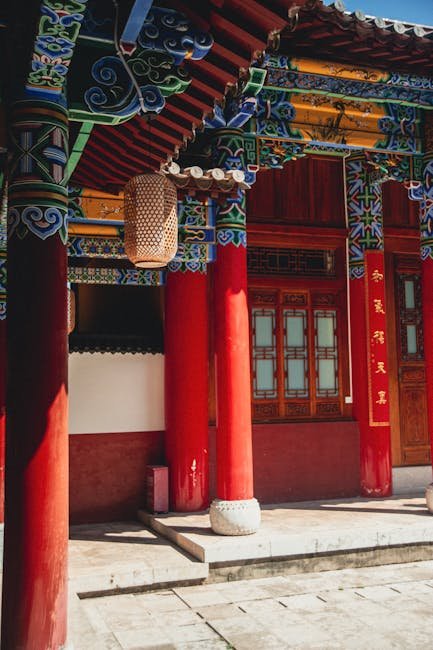
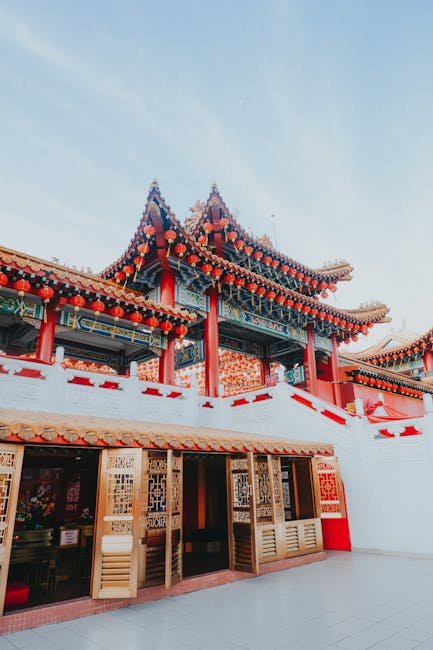
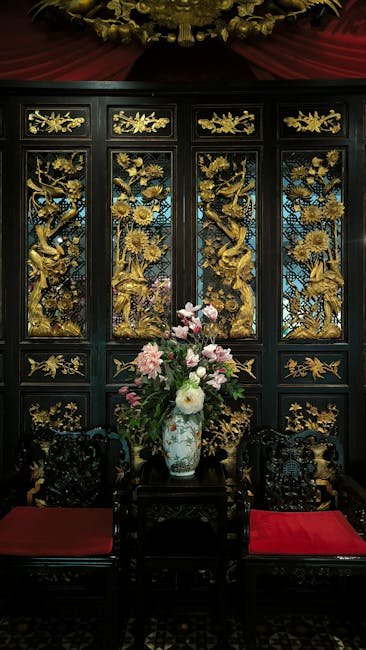
Chinese window lattices (花窗, hua chuang, or 漏窗, lou chuang) are among the most exquisite decorative elements in traditional Chinese architecture. These intricately carved wooden screens fill window openings, door panels, and partition walls, transforming functional openings into works of art. Window lattices serve to filter light, provide ventilation, create privacy, and frame views of gardens and courtyards. The patterns created by the lattice work range from simple geometric grids to elaborate compositions of flowers, birds, and auspicious symbols.
Craftsmanship and Materials
Traditional Chinese window lattices are crafted from wood, typically using hardwoods such as rosewood, mahogany, or nanmu that are durable and capable of holding fine detail. The lattice work is assembled using mortise-and-tenon joints, without nails or glue, a technique that requires exceptional precision and skill. The individual lattice pieces are cut from thin wooden strips, shaped, and fitted together to create the desired pattern. In the finest examples, the lattice work is augmented with carved panels depicting scenes from mythology, literature, or daily life.
The region of production influences the style of lattice work. Suzhou and the Jiangnan region are famous for their refined, delicate lattices featuring intricate geometric patterns and garden-related motifs. Lattices from Shanxi and the north tend to be more robust and simpler in design, reflecting the colder climate and the region's pragmatic building traditions. Lattices from Fujian and Guangdong are often more richly carved, with deeper relief and more complex compositions that reflect the region's prosperous merchant culture.
"The Chinese window lattice transforms the ordinary act of looking out a window into an aesthetic experience. The lattice creates a screen through which the outside world is filtered, fragmented, and recomposed into patterns of extraordinary beauty. Light passing through the lattice becomes a pattern on the floor, moving and changing through the day like a sundial made of shadows."
Symbolic Patterns
The patterns used in Chinese window lattices are rich with symbolic meaning. Geometric patterns such as the "ice crack" (冰裂纹, bing lie wen) pattern — resembling cracked ice — symbolize the arrival of spring and the breaking of winter's hold. The "cash" (钱纹, qian wen) pattern, using overlapping circles representing ancient Chinese coins, symbolizes wealth and prosperity. The "ruyi" (如意) pattern, based on the shape of the ceremonial scepter, symbolizes the fulfillment of wishes.
Figurative patterns depict auspicious animals and plants. Bats (蝠, fu) represent good fortune, as the word is a homophone for "blessing." Cranes and pine trees represent longevity. Fish (鱼, yu) represent abundance, as the word sounds like "surplus." The peony (牡丹, mu dan) represents wealth and honor, while the plum blossom (梅花, mei hua) represents perseverance and hope. These motifs are combined in endless variations, creating a visual language that was understood by all who saw it.
The arrangement of lattice patterns also followed compositional rules that balanced emptiness and fullness. A skilled lattice maker would leave certain areas deliberately open while filling others with dense carving, creating a rhythm that guided the eye across the window surface. This principle, derived from Chinese painting's emphasis on negative space, ensured that the lattice never felt cluttered despite its intricate detail. The interplay between solid and void in the lattice work also controlled the quality of light entering the room — dense areas created pools of shadow while open areas admitted shafts of direct sunlight that shifted across the interior floor throughout the day.
The lattice window also performs a sophisticated architectural function that goes beyond decoration. In the humid climate of southern China, where window lattices reach their highest development, the lattice openings facilitate cross-ventilation while the wooden framework provides shade — reducing interior temperatures naturally without mechanical systems. The density of the lattice pattern can be adjusted to control the amount of light and air entering a room: denser patterns for south-facing windows that receive direct sun, more open patterns for north-facing windows that capture diffuse light. This environmental performance, integrated seamlessly with the aesthetic and symbolic functions of the lattice, exemplifies the holistic approach to design that characterizes the best of Chinese vernacular architecture. Each lattice window is simultaneously a climate-control device, a light modulator, a privacy screen, a symbolic message, and a work of art — all achieved through the patient assembly of small wooden pieces by skilled craftsmen working within a tradition passed down through generations.
Functional Design
Beyond their decorative function, Chinese window lattices are carefully designed to control light, air, and views. The density of the lattice can be adjusted to suit the orientation of the window — south-facing windows may have more open lattices to admit winter sun, while west-facing windows may have denser lattices to reduce afternoon heat gain. In gardens, "leaky windows" (漏窗) with open lattice work allow views through to the garden beyond while framing the view like a painting.
The lattice also provides a practical function in the Chinese context. In an architecture that traditionally used paper rather than glass for window covering, the lattice provided the structural support for the paper while allowing light to filter through. The paper diffused the light softly, creating the warm, ambient interior lighting that characterizes traditional Chinese interiors. Today, while glass has replaced paper, the lattice tradition continues, with modern interpretations using metal, glass, and composite materials alongside traditional wood.
The restoration and preservation of historic window lattices has become a specialized conservation discipline. Traditional lattice windows in historic buildings face multiple threats: wood rot from humidity, insect damage, and the gradual loosening of mortise-and-tenon joints through seasonal expansion and contraction. Conservation workshops in Suzhou and Beijing now train apprentices in the techniques of lattice repair, including the precise replication of damaged lattice pieces using traditional hand tools and joinery methods. Each replacement piece must be cut from the same wood species, shaped to the same profile, and fitted with the same joint type as the original. This painstaking work ensures that China's historic buildings retain not only their structural integrity but also the intricate play of light, shadow, and pattern that defines the experience of their interiors.
The window lattice tradition offers contemporary architecture more than decorative motifs. The lattice's ability to modulate light, control privacy, define space without walls, and create dynamic shadow patterns has inspired architects working in contexts far removed from traditional China. The perforated metal screens of contemporary buildings, the intricate brise-soleil of tropical modernism, and the parametric facade patterns generated by computational design all owe a conceptual debt to the humble wooden lattice — a reminder that the most enduring architectural innovations often originate in the simplest of building elements, refined over centuries by generations of anonymous craftsmen whose names are lost but whose skill lives on in every pattern of wood and light.
The materials used in traditional Chinese window lattices extend beyond wood to include bamboo, ceramic, and even stone in different regional contexts. In the bamboo-rich regions of southern China, particularly in Guangdong and Guangxi, window lattices were sometimes crafted from split and shaped bamboo strips, their natural golden color and visible node joints adding warmth and texture to interior spaces. In Fujian, ceramic window lattices were produced for exterior applications where exposure to rain and sun made wood impractical — these were made from molded and glazed ceramic pieces fired in kilns, their glazes in shades of celadon green, amber brown, or deep blue echoing the ceramic roof tiles above. In the mountainous regions of Sichuan and Yunnan, stone window lattices carved from local sandstone were used in defensive watchtowers and granary buildings where security and fire resistance took priority over delicacy. Each material imposed its own design constraints and aesthetic possibilities: wood allowed the finest detail and the most complex joinery, bamboo offered a vernacular warmth and affordability, ceramic provided permanent color and weather resistance, and stone gave monumental permanence. This material diversity within a single architectural element demonstrates the remarkable adaptability of Chinese architectural craftsmanship to local resources and conditions.
The symbolism embedded in Chinese window lattice patterns constitutes a sophisticated visual language that complemented the literary culture of traditional China. In a society where education and classical learning were the primary paths to social advancement, window lattices in scholar's studios often incorporated symbols of scholarly achievement: the four treasures of the study (brush, ink, paper, inkstone), the ruyi scepter representing success in examinations, and the lingzhi mushroom symbolizing immortality and scholarly refinement. Garden window lattices in Suzhou and Yangzhou frequently featured motifs derived from classical poetry — a prunus branch suggesting the famous lines of the Tang poet Li Bai, or a bamboo grove evoking the Song painter Wen Tong's celebrated ink bamboo compositions. These literary references transformed the window lattice from a mere architectural element into a medium of cultural expression, allowing the educated householder to surround himself with visual quotations from the canonical works that defined Chinese civilization. For the modern observer, these symbolic programs offer an additional layer of appreciation: the window lattice is not only a feat of craft and a solution to environmental problems but also a repository of cultural memory that connects the anonymous craftsman to the great tradition of Chinese literary and artistic culture.
Regional Lattice Styles
The style of window lattices varies significantly across China's regions, reflecting local aesthetic preferences, available materials, and climatic conditions. Suzhou and the Jiangnan region are famous for their refined, delicate lattices featuring intricate geometric patterns and garden-related motifs. Lattices from Shanxi and the north tend to be more robust and simpler in design, reflecting the colder climate and pragmatic building traditions. Lattices from Fujian and Guangdong are often more richly carved with deeper relief and complex compositions that reflect the region's prosperous merchant culture and exposure to Southeast Asian artistic influences.
The regional differences in lattice design also reflect the social status and occupations of building owners. Scholar-official gardens in Suzhou used refined, understated lattice patterns that expressed Confucian restraint and scholarly cultivation. Merchant houses in Huizhou featured elaborate lattices with auspicious symbols that openly displayed wealth and commercial success. Temple lattices incorporated Buddhist and Daoist iconography. Government office lattices followed standardized patterns regulated by imperial building codes. This diversity of styles within a single architectural element demonstrates the remarkable sophistication of Chinese visual culture, where even the pattern of a window could communicate nuanced information about the owner's social position, cultural values, and regional identity.
Lattice Patterns and Geometry
The geometric patterns of Chinese window lattices represent a sophisticated tradition of applied mathematics. The most complex lattice patterns are based on repeating geometric grids derived from the division of circles and squares. The "ice crack" pattern, one of the most admired, is created by dividing a rectangle into irregular polygons that resemble cracked ice. The "cash" pattern uses overlapping circles arranged in a grid, their intersections creating the cash-coin motif. The "rustic lattice" pattern uses randomly spaced vertical and diagonal slats to create an intentionally irregular, naturalistic appearance.
The mathematical precision required to execute these patterns was achieved through a system of proportional modules known as the "lattice ruler" (花窗尺, hua chuang chi). Each lattice pattern had established proportions for the width, spacing, and angle of its components, recorded in pattern books passed down through generations of craftsmen. The most complex lattice patterns could require hundreds of individual wooden pieces, each cut to exact specifications and fitted into the overall composition. This system of modular design allowed lattice makers to produce consistently high-quality work across different projects and regions while allowing for creativity within established frameworks.
Preserving Lattice Heritage
The preservation of historic window lattices faces significant challenges. Traditional lattice windows in historic buildings are threatened by wood rot from humidity, insect damage, and the gradual loosening of joints through seasonal expansion and contraction. The loss of skilled craftsmen capable of repairing or replicating historic lattice patterns compounds these problems. Conservation workshops in Suzhou and Beijing now train apprentices in traditional lattice-making techniques, including the precise replication of damaged pieces using hand tools and traditional joinery methods.
Digital documentation has become an essential tool for lattice conservation. High-resolution photography and 3D scanning are used to create precise records of historic lattice patterns before restoration begins. These digital records serve as reference material for craftsmen creating replacement pieces and as documentation for future scholars. Some conservation projects have used computer-controlled routers to produce replica lattice components, though purists argue that machine-cut pieces lack the subtle variations in depth and angle that give hand-carved lattices their distinctive character. The debate between traditional and technological approaches to lattice conservation reflects broader questions about how best to preserve historic architectural craftsmanship in the twenty-first century.
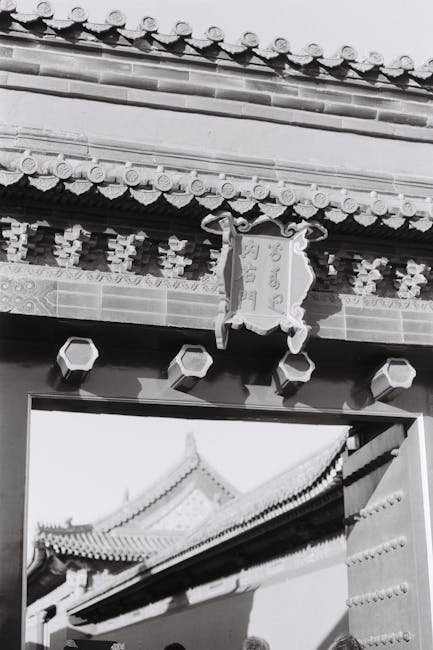
Wood, Brick & Stone Carving
The three great carving arts
Chinese Color Palette
Colors rooted in Five Elements philosophy
Classical Chinese Interiors
Refined aesthetics of traditional homes